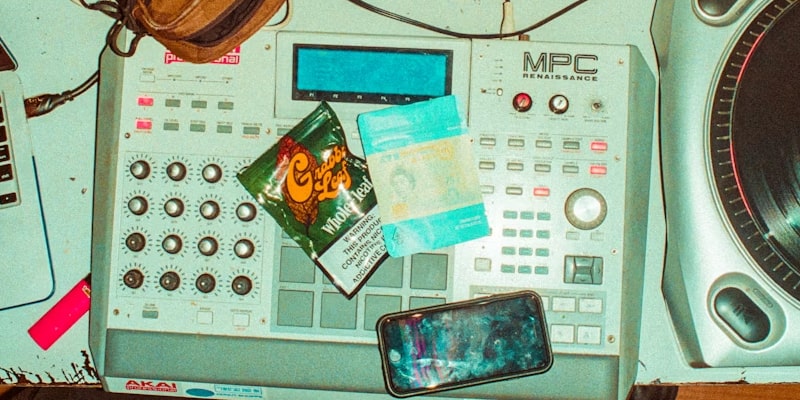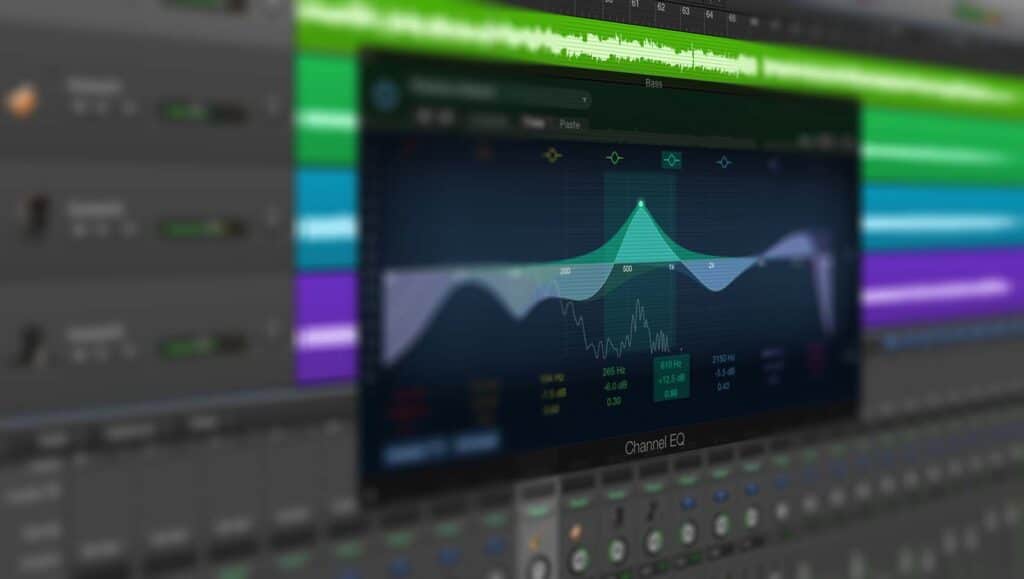
Lo-fi music has long since moved beyond being a niche genre for a small circle of enthusiasts. Today, millions of people listen to it while studying, working, relaxing, or simply spending time alone with their thoughts. Behind this apparent simplicity lies an entire culture with its own rules, approaches, and sonic aesthetics. One of the key tools in creating lo-fi tracks is loops — short musical fragments on which entire compositions are often built.
For beginners, loops are an accessible way to enter the genre, while for experienced producers they are a fast and effective way to turn ideas into finished tracks. However, alongside the question of how to use loops, another inevitably arises: where to find them, how to choose the right ones, and whether they can be safely used in commercial releases. This article focuses precisely on these questions — without myths or unnecessary theory, but with a practical understanding of how loops function in lo-fi music.
What Are Loops and Why They Matter in Lo-Fi Music
Loops are short musical fragments designed to repeat seamlessly without a noticeable beginning or end. In lo-fi music, they are not just a convenient tool but essentially the foundation of the genre. If you listen closely to most lo-fi tracks, it becomes clear that they do not aim to constantly evolve or impress with complex structures. Instead, their strength lies in repetition, stability, and the feeling of a frozen moment. Loops fit this approach perfectly.
Lo-fi emerged at the intersection of hip-hop, jazz, and sampling culture. Producers took short excerpts from old recordings — chord progressions, phrases from vinyl records, rhythmic fragments — and built entire tracks around them. From this came the core philosophy of the genre: not to overwhelm the listener, but to create an atmosphere. A loop allows the mood to be set from the very first second and maintained throughout the track without unnecessary distractions.
Another reason loops work so well in lo-fi is the aesthetic of imperfection. Slight timing inaccuracies, noise, crackle, or subtle pitch instability are not perceived as flaws, but as part of the character. Many lo-fi loops already include these elements: loose drum swing, saturation, tape effects, vintage-style compression. As a result, even a simple loop can sound more alive than a perfectly clean, precisely played pattern.
It is also important to understand that using loops does not make the music primitive. In lo-fi, a track’s individuality is not defined by the number of notes, but by how the producer works with the material — filtering, stretching, chopping, adding effects, and making small arrangement changes. The same loop can sound completely different in two different tracks. In this sense, loops are not a replacement for creativity, but a starting point.
Where to Find Loops for Lo-Fi Tracks
When it comes to searching for lo-fi loops, it quickly becomes clear that there are many sources, and they differ significantly from one another. Some are ideal for getting started and experimenting, others are better suited for serious release-oriented work, while some function more like large libraries that require careful selection. Broadly speaking, lo-fi loop sources can be divided into three main categories: free resources, paid services, and large catalogs.
Free Loop Resources
Free loops are the most common entry point into lo-fi production, especially for beginners. They allow you to explore the genre without financial investment and to understand which sounds resonate with your personal style.
- One of the most well-known resources in this category is Slooply.
This platform focuses specifically on lo-fi and chill-oriented genres. It offers free sample packs containing chord loops, drum loops, and atmospheric textures. The material is already stylistically processed, making it easy to integrate into a track without extensive additional work. Slooply is often used as a foundation for early projects or for quickly sketching ideas. - Another popular option is Touch Loops, particularly their Beat Delivery series.
These free packs usually act as demo versions of paid products. They often include drum loops, melodic phrases, and sometimes MIDI files. The quality is high, as these packs are essentially showcases for commercial libraries. They are well suited for understanding how modern, streaming-ready lo-fi sounds. - A separate niche is occupied by communities and independent creators who share loops on platforms like SoundCloud, Reddit, or through BandLab Sounds.
Here you can find unconventional, raw, and characterful material. However, this category requires extra caution regarding licensing — not all free loops are permitted for commercial use.
Paid Services and Sample Packs
Paid loops are typically chosen by producers who value consistent quality, clear organization, and minimal legal risk. In lo-fi, this is especially important, as many tracks are released on platforms like Spotify, YouTube, and Apple Music, where copyright issues are taken very seriously.
- Prime Loops is one of the most established services in this space. Their lo-fi packs usually contain large collections of chord loops, bass lines, drum loops, and effects. All samples are created within a unified aesthetic and are well sorted by tempo and key, allowing producers to build tracks quickly without spending time matching incompatible elements.
- Cedar Sound Studios focuses specifically on lo-fi and chillhop producers. Their packs often have a warm, organic sound featuring vintage keys, guitar loops, and analog noise. These samples work particularly well for atmospheric tracks where texture and space matter more than dense arrangements.
- ProducerSources and similar platforms offer more flexible packs that often include both audio loops and MIDI files. This approach suits producers who do not want to rely entirely on pre-processed sounds and prefer to adapt the material to their own sonic identity.
Catalogs and Large Libraries
Catalogs represent a separate category that suits producers willing to invest time in searching and curating material. Unlike dedicated lo-fi packs, these resources are not always genre-specific, but they can be highly valuable with the right approach.
- MIDINation is a large aggregator of sample packs and loops. It hosts dozens of lo-fi packs from different creators, making it a convenient place to compare styles and discover less typical sounds. Essentially, MIDINation functions as a library rather than a single brand.
- Freesound is an even broader and more chaotic resource. It is an open database of sounds and loops, ranging from vinyl crackle to jazz chords recorded on old tape machines. For lo-fi producers, it can be a goldmine — but only if licensing is handled carefully. Each file may use a different Creative Commons license, and ignoring these terms can lead to serious issues. Freesound is best suited for creating unique textures and atmospheres that are difficult to find in standard sample packs.
Catalogs rarely provide a ready-made lo-fi sound “out of the box”, but they are often what allows producers to move beyond templates and develop a truly personal style.
How to Choose the Right Loops for Lo-Fi Tracks
Choosing loops in lo-fi is not about whether something sounds impressive on its own, but about context and feeling. Beginners often pick loops that seem interesting in isolation but become distracting once placed in a track. In lo-fi, a loop should never dominate — it should serve the atmosphere.
Simplicity is key. Chord loops with too many notes, fast runs, or constant variations can quickly become tiring. Since lo-fi is often listened to in the background, stability and predictability are advantages rather than drawbacks.
Timbre and processing are equally important. Most lo-fi loops already have a certain character: rolled-off highs, light saturation, and vintage effects. If a loop sounds too clean or digital, additional processing will likely be necessary to make it fit the genre. That is not a problem in itself, but it is worth considering how much time you are willing to spend shaping the sound.
Key and tempo information also matter. Many lo-fi loops are clearly labeled with BPM and key, which greatly simplifies workflow. When this information is missing, loops can become problematic during arrangement, especially melodic ones that do not always stretch or transpose cleanly.
Uniqueness is another important factor. The more popular a loop or sample pack is, the higher the chance that someone else has already used the same sound. This does not mean such loops should be avoided, but they should be transformed — chopped, filtered, reversed, or layered with other sounds. In lo-fi, the value lies not in the loop itself, but in how you reinterpret it.
Legal Aspects: Licensing and Usage Rights
The legal side of using loops is often overlooked until problems arise. In lo-fi, this issue is especially relevant due to the genre’s close relationship with sampling and the strict content recognition systems used by streaming platforms.
The safest option is using royalty-free loops. This means you can use them in commercial releases without paying additional fees or crediting each individual sound. Most paid lo-fi sample packs operate under this model.
Free loops can be more complicated. They are often distributed with restrictions, such as non-commercial use only or mandatory attribution. If such a loop ends up in a monetized release on Spotify or YouTube, it may violate the license terms.
Special attention should be paid to platforms that use Creative Commons licenses, such as Freesound. Each file has its own specific license, and not all of them allow commercial use. Ignoring these conditions can result in takedowns or loss of monetization.
Another potential risk involves loops that contain recognizable vocal phrases or melodies. Even if a loop is technically royalty-free, such elements can trigger content ID systems. In lo-fi, it is generally safer to use vocals only as abstract textures rather than clear, identifiable phrases.
The rule is simple: if you are not certain about a loop’s license, do not use it in a commercial release.
A Few Words for Artists
Lo-fi is not about perfection — it is about feeling. Loops do not replace creativity; they help you reach the core of a track faster: its mood and atmosphere. Whether you use free samples or premium packs does not matter nearly as much as how you hear them and what you do with them.
Experiment, combine different sources, do not be afraid to reshape existing loops and make them your own. And always stay mindful of licensing — not as a limitation, but as a way to protect yourself and your music. Lo-fi values honesty and individuality, and even the simplest loop can sound truly unique when filtered through your own artistic vision.
P.S. If you’re serious about making your lo-fi tracks stand out, this concise breakdown of production, mixing, and mastering is well worth a look.
Rate this post along with 0 others