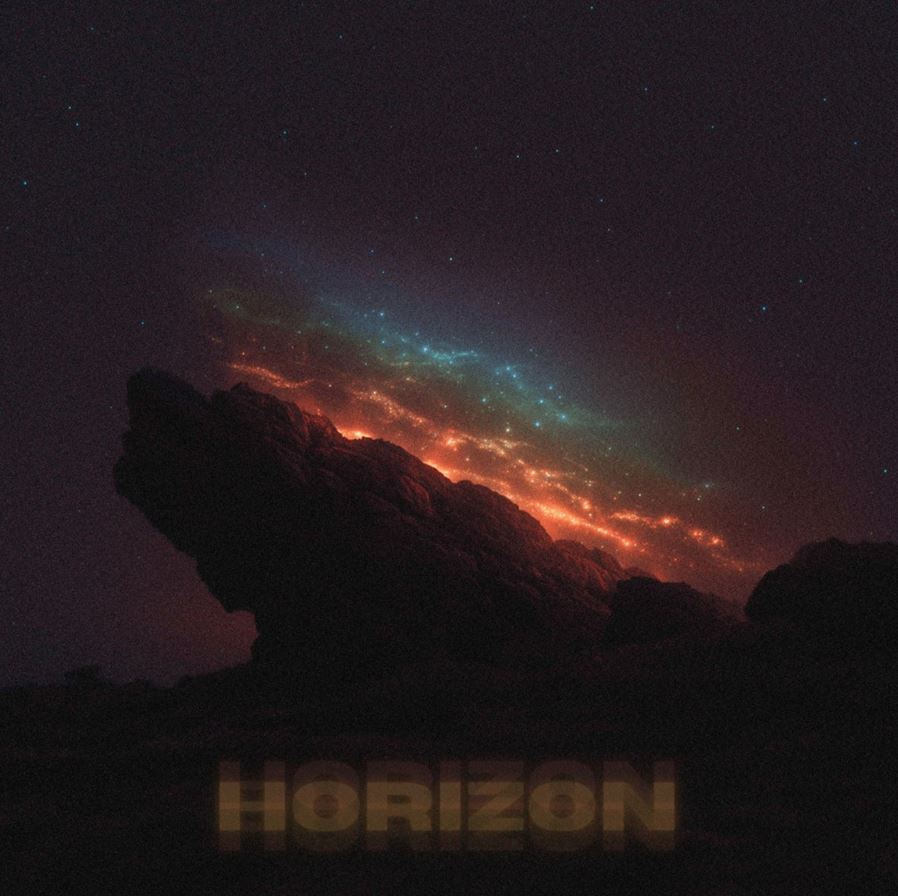
Glitter Isn’t Gold is one of eight pieces of a grand and honest story titled “When the disco ball crashed down.” The title itself sets the stage for me: the party is over, the glittering sphere has shattered into thousands of sharp shards, and you are left in the semi-darkness of an empty hall, alone with your thoughts. For Blue Sinclair, this debut project is an attempt to capture that specific state of being in your twenties, navigating the labyrinth of New York City, and trying to build a new “self” while painfully letting go of who you used to be. It is the moment when the city’s neon decorations stop blinding you, and you begin to see the true outlines of reality.
Musically, the piece begins cautiously, almost in a whisper. A muffled hip-hop beat sounds as if it’s drifting from a side street off Canal Street, leaving the entire central space for the voice. For the first thirty seconds, we are accompanied by soft, enveloping synthesizers that prepare the ground for Sinclair deep, almost velvety vocals.
I love observing the percussion in this track: it is scattered across the stereo field so delicately that it creates a thin layer of high frequencies. It reminds me of sunlight shimmering on cold water, right above the dark Mariana Trench of the primary sound. As the bass lines join the vocals, the composition takes on the hues of late-night R&B and gains a certain drive, as if the city’s pulse is quickening. Toward the end, around the 2:30 mark, the lyrics begin to layer upon one another. It doesn’t feel like chaos, rather, it feels like that sensation when different emotions overwhelm you all at once, and you don’t know which one to grasp first.


Listening to this track, I feel as if I am deciphering a hidden code. Sinclair raises questions that we usually keep quiet during coffee shop small talk. He suggests that sometimes everything we see is merely a projection of our own beliefs: “At times all you see is what you believe.” We convince ourselves that we aren’t naive, yet we continue “confessing to the clouds,” because in this world of capitalist noise, it’s rare that someone truly listens. It is a metaphor for that existential loneliness in a crowd of millions, where even the rain doesn’t always “wash it right.”
The central theme of the track is a deconstruction of “American excess.” Blue Sinclair makes a very sharp move by playing with words: “American Express and American excess.” It’s a direct hit to the cult of consumerism, where money attempts to substitute for God. The pursuit of the material—this eternal “more and better”—only drives us into a routine, leaving us “stuck in a rut.” The artist warns us: everything with a price tag might carry a hidden sabotage for our soul. He reminds us that power and status fade as quickly as the dawn fog over the Hudson, and that real success is a category that is almost impossible to measure with a bank account.
But what strikes me most is the lack of false messianism. Blue Sinclair doesn’t lecture from a high pulpit. He concludes the track with an honest, almost vulnerable admission: “But I still buy into the flashiness.” This is a moment of maximum intellectual honesty. Even while understanding that “glitter isn’t gold,” he admits that we remain human—vulnerable to beauty, temptation, and bright mirages.
In summary, this track is about a painful but necessary attempt to “clear your mind” and finally “realign.” Moving between synth-pop, trip-hop, and electronic R&B, Blue Sinclair shows us that the main battle isn’t for social success, but for a “better body and soul.” The external glitter is just a decoration that will eventually fall, just like that disco ball. And when the lights go out, the only thing that will matter is whether you were able to discern the true gold within yourself.
Rate this post along with 0 others