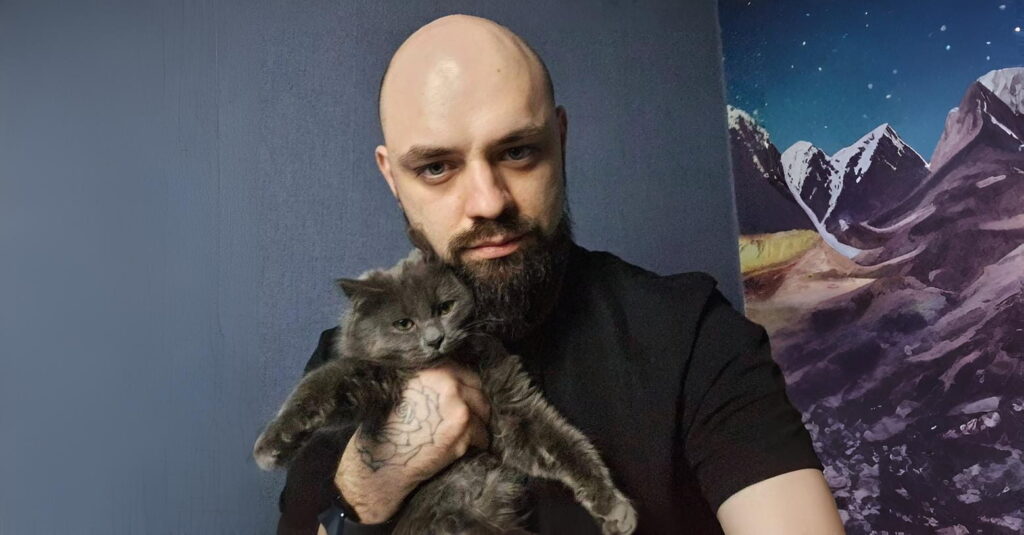
In the ever-evolving world of underground electronic music, few artists manage to capture the raw blend of melancholy and hope as effectively as Melancholic Bird. Hailing from the town of Korosten, Ukraine, this producer has made a significant journey from his early days in metalcore and lo-fi to becoming a distinctive voice in the future garage scene.
In this exclusive interview, Melancholic Bird opens up about his creative evolution, how the war in Ukraine shaped his latest soundscapes (including the powerful track “Kherson”), and why nature remains his ultimate source of inspiration. Dive into the atmospheric world of a producer who turns silence and reflection into deep, immersive sound.
PART 1: INTRODUCTION & EVOLUTION
Hi Bohdan! It’s great to finally have this conversation. Your music has a very special place in our community.
Hi everyone! Thanks for having me and for the opportunity to share my story. I’m happy to be here!
Bohdan, tell us a bit about yourself to start with. How did your musical journey begin, and what led you to create the Melancholic Bird project?
I started “raving” about music when I was around 16. I began my journey with heavy music; back then, I loved listening to metalcore, post-hardcore, and rock in general. My friends and I started our first rock band at that age, though it didn’t last long. A few years later, we formed a more serious group, and that’s where it all began. The band needed to record and mix our songs, but since I’m from a small town called Korosten, there were basically no people who could do it qualitatively. So, I decided to do it myself. I bought some necessary gear and started learning everything on YouTube. I got truly hooked on sound engineering and music production. Eventually, the band split up, but my skills and passion for sound remained, and I began to develop them even further. I also started liking instrumental, orchestral, and cinematic music. I began developing in that direction—listening, studying, analyzing, and trying to write it myself. I think it’s noticeable in my works. But for relaxation and rest, I mostly listened to Lo-Fi. I got fired up by that genre and started writing it too, just to “chill out,” so to speak.
Your path started with light Lo-Fi, but over time the sound became deeper and heavier. Was this a conscious search for a new form, or did the Future Garage genre “find” you at the right moment in your life?
For a while, I was writing Lo-Fi, but then my friend Dimon introduced me to this specific atmospheric, haunting future garage with beautiful, thick beats. For me, it was like a breath of fresh air—honestly, I fell in love with the genre instantly. I rushed to Spotify, checked thematic playlists, started listening, and that was the beginning of my journey toward changing genres.
Your track “Kherson” feels like a true turning point in your sound. What story or emotion were you putting into it at that moment, and has your perspective on this track changed now?

The track “Kherson” was a spontaneous reflection, a pour-out of pain and despair into music. I wrote it very quickly and tried not to edit it, so the emotion would stay pure. I created it exactly during the days of the events with the dam* and the reservoir. I couldn’t even imagine it was real; watching the flooding of homes, people, and animals, I just felt an incredible despair that turned into music.
*The artist is referring to the destruction of the Kakhovka Dam by Russian forces in June 2023, which led to a massive humanitarian and ecological disaster in Southern Ukraine
How have the events in Ukraine affected your ability to create music? Has the dark vibe of Future Garage become a way for you to reflect on what is happening around you?
Obviously, the war has affected my life in principle, just like all Ukrainians. For the first few months, I didn’t write anything at all, but over time, as the psyche adapted, I started creating again. Plus, for me, it’s probably the best way to distract myself from anything. But yes, the future garage vibe fits these difficult times; in garage, you can really dive in and dissolve.
PART 2: ATMOSPHERE & IMAGE
Your nickname sounds very poetic. Why “Melancholic Bird”? Is there a personal story behind this image?
Basically, I love and listen to minor, melancholic music—it’s my vibe =D. And I always wanted to create something like that, something dark and melancholic, so I think the nick “Melancholic Bird” describes me perfectly.
In your Spotify description, you mention “wide space.” How do you build this depth technically so that the listener feels like they are inside the soundscape?
Well, proper equalization and spatial processing do the trick =) When I create a track, I sort of have a “feeling” of the sound in my head and how it should be. And then, using tools and reverb, I bring it to life in the DAW.
Your Instagram is filled with landscapes. Are there specific places in Ukraine that inspired specific tracks? Where is that “place of power” for Melancholic Bird?
I don’t travel very far or very often. Mostly, it’s my town—it’s surrounded by forests. I love cycling, so whenever I have the chance, I often ride into the woods, spending time there alone or with friends. When I’m alone, I often reflect and think, including about music. The forest is a great place to reboot your brain, rest, and relieve stress. So you could say my “place of power” is exactly the Korosten forests. I get inspired here a lot.
PART 3: CREATIVE PROCESS & TOOLS
We’ve seen glimpses of your process in your stories. Which DAW do you feel most comfortable in, and do you start a track with a melody on a synth or do you build that signature rhythm first?
I’ve been working in Studio One for many years. I bought it a long time ago and stuck with it. Almost always, I start my tracks by creating background textures. Over time, I’ve gathered a large collection of different sound texture libraries and pads. I love playing with them, making them “friends” with each other, plus I add different VST pads, and that creates a unique soundscape. On top of that, I start layering melodic parts: piano, guitars, or synth elements. Simultaneously, to see the sonic picture more clearly, I create the beat. I also like to layer the beat for a long time with different samples and hits to create something unique and interesting; I also like adding different organic sounds into the beat to make it feel “alive.”
What was the hardest part of transitioning between these genres? For example, how did you learn to work with sub-bass, which was almost non-existent in your earlier works?
Well, the transition wasn’t too hard. It just took a couple of months to get used to the new sound and for the brain to adapt to a wider sound with a sharp beat. Overall, I enjoyed mastering this new genre. And all the questions I had, I solved through YouTube—watched tutorials, experimented, same with the sub-bass =)
You mention that you like mixing genres. What is the most unexpected element (perhaps from jazz, rock, or folk) you’ve ever added to your atmospheric ambient?
As for experiments, it’s mostly always orchestral elements. I really love violins and cello, and I almost always try to add them to my works. It complements the future garage picture so well: atmospheric textures, thick sub-bass, a crisp “crystalline” beat, piano melodies, vocal samples, and orchestral elements… there’s something special in that.
PART 4: PERSONALITY & CONTEXT
What state are you in when you create music? Do you need total isolation, or can you write amidst chaos?
As I said before, creating music is the best way for me to distract myself from anything. I completely immerse myself in the process and almost never get distracted while creating. But the best state for creating is when I’m alone in my home studio, everything is quiet and calm, pure concentration.
Your music is perfect for concentration and reflection. But what helps you focus? Do you have a specific ritual before sitting down for a new project?
There isn’t a specific ritual. The main thing is for the day to be relatively free, so I’m not rushing anywhere—then everything turns out great. I love freedom.
Who is your ideal listener? Describe a situation in which your music, in your opinion, reveals itself 100%.
As for the ideal listener, I think anyone who likes my music is my ideal listener. Basically, I create the music that I love to listen to myself. So I’m glad for everyone who vibes with it.
PART 5: LOOKING INTO THE FUTURE
Do you think Lo-Fi and Future Garage are “siblings,” or do they just accidentally cross paths in modern instrumental music?
If they are “brothers,” I think they are distant ones =D Still, the genres are quite different. In terms of sound, mood, mixing, and instrumentation. Yes, they are both genres of “background” music, if you can say that, but to me, they are still different.
5000 monthly streams is a great foundation. Where does Melancholic Bird plan to “fly” next? Should we expect a full-length concept album?
I plan to fly wherever the Spotify algorithms take me =D Because the genre is quite underground, and it’s hard to promote it on your own. So I just write tracks and give them to the world, and what happens, happens. In terms of a conceptual album—unlikely. I prefer to just sit down and start improvising with sound and textures, making something interesting without overthinking it, just as it is.
What would you say to every Ukrainian producer who is currently trying to create amidst the war?
Well, that’s a tough question. Everyone has different situations. But the most important thing, as great musicians and people who have achieved something say—don’t give up and keep going, keep going, keep going. Consistency and dedication are the keys to success in any field.
CLOSING WORDS
Bohdan, thank you so much for your time and for being so open with us. We’ll be watching your “flight” closely!
Thank you for such great and deep questions, it was a pleasure. I’m glad for everyone who vibes with my music. See you in the soundscapes!
Rate this post along with 0 others