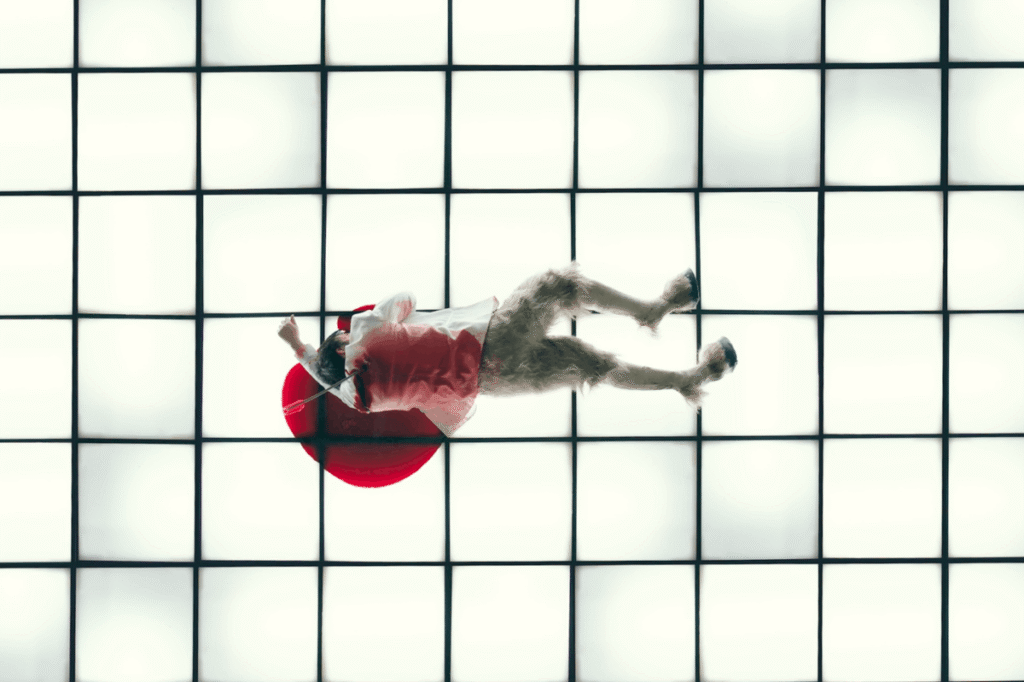
Hello! Today we are diving into a lyric that has become a true phenomenon and, frankly, one of the most poignant musical confessions of the last decade — “SLOW DANCING IN THE DARK” by Joji. This is a fragile, emotionally charged confession, hidden beneath a hazy fog of lo-fi aesthetics and majestic synthesizers.
In my opinion, Joji has hidden a deep philosophical subtext here, forcing us to reflect on the nature of self-destructive love and the pain of an inevitable finale that we desperately try to delay.


1. The Metaphor of Darkness: Dancing into the Unknown
The central and most symbolic element of the song is the haunting image of the “slow dance in the dark.”
This serves as a tragic metaphor for a relationship that has already exhausted itself, yet the partners continue their inertial movement. Dancing in the dark represents moving by touch, without a vision of the future, and without understanding where these final steps are leading.
- An Act of Warning: As I see it, the line “Don’t follow me” is a moment of brutal honesty. The narrator recognizes his own “darkness” — be it depression or emotional instability — and warns his partner. If she follows, she will end up in his arms, but those arms offer no sanctuary; they only drag her further into the abyss.
- Waiting for the Finale: The phrase “Waiting to get there” feels like a painful anticipation of the inevitable crash. It is the state of knowing a catastrophe is coming, yet remaining paralyzed in line for the impact.
2. Philosophical Subtext: Comparison and the Loss of Identity
There are layers within these lyrics that transcend the typical tropes of unrequited love.
Surrender and “The Other” The narrator doesn’t fight for his happiness, which is perhaps the most devastating realization: “Give me reasons we should be complete / You should be with him, I can’t compete.” The figure of “him” appears as an idealized rival. In my view, this “him” might not even be a physical person, but rather a representation of the stable, “healthy” life the narrator feels incapable of providing. This is an existential surrender—a philosophical acceptance of one’s own perceived inadequacy.
The Identity Crisis The line “You looked at me like I was someone else” strikes at the core of the song. To me, this reflects that terrifying moment when a partner becomes a stranger. You look into their eyes and see not love, but indifference. It is a total loss of connection where your identity blurs, and you are no longer the person they once loved, but a stranger they accidentally ended up with for one final dance.
3. Moral Conflict: Sacrifice vs. Egoism
A constant internal struggle pulses throughout the track. The narrator is caught between the selfish desire for closeness (“Can it be one night?”) and the selfless urge to protect his partner by pushing her away.
- Refusal of Half-Measures: By stating “I don’t want a friend… I want my life in two,” the narrator takes a radical stance. He refuses the consolation prize of friendship. For him, love is binary: it is either a total merging of lives or complete disappearance.
- Anger as a Shield: The sudden shift in tone with “I don’t fuck with your tone” introduces a raw, grounded element of pain. Often, when we hurt, we resort to hostility to make the detachment easier. I see this as the narrator’s attempt to play the “villain” to simplify the process of her leaving for someone better suited for her.
4. Personal Opinion: Why It Resonates
The power of this song lies in the staggering contrast between its lush, cosmic production and the visceral, grounded pain of the lyrics. Joji uses his voice as an instrument of pure emotion, shifting from a fragile whisper to a desperate primal scream in the finale.
That final scream is where the philosophy ends. There are no more metaphors; there is only the raw sound of a breaking heart.
As I see it, “SLOW DANCING IN THE DARK” is a reminder that sometimes the highest act of love is the decision to let someone go, even if it means staying alone in the shadows. It is a story about the importance of stopping the dance when the music has already turned to silence.
The track feels like the last puff of cigarette smoke before stepping out into a cold, indifferent night. It offers no hope for a happy ending, but it provides something perhaps more valuable: a sense of solidarity in our shared sadness.
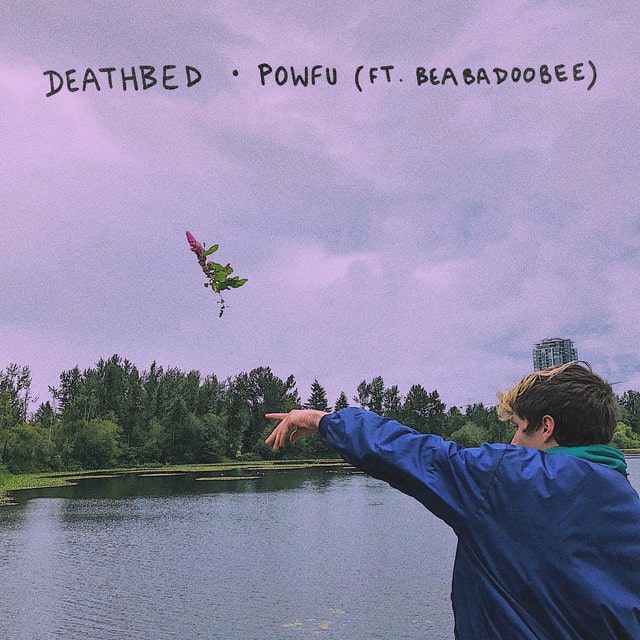
P.S. If Joji’s exploration of “darkness” resonated with you, you might also find meaning in our deep dive into Powfu’s “death bed”, another profound meditation on love, sacrifice, and the beauty of a final farewell.
Rate this post along with 0 others