
The landscape of modern sports is usually associated with aggressive marketing, the thunderous roar of stadiums, and high-energy electronic beats designed to squeeze every last drop of adrenaline out of an athlete’s body. We have been conditioned to believe that training must always be a “faster, higher, stronger” endeavor, accompanied by heavy rock or pulsing techno. However, there is another, more introspective side to the sporting world—sport as a form of meditation, as an intricate intellectual duel, or as a relentless search for the perfect physical balance. This is where Lo-Fi (low fidelity) enters the stage. Over the last decade, this genre has evolved from a niche internet phenomenon into a global philosophy of tranquility and a vital tool for mental performance.
The question of which sport best suits the Lo-Fi genre might seem paradoxical at first glance. Can an athlete truly compete to music that was originally designed for sleeping, relaxing, or cramming for university exams? The answer lies deep within the nature of the genre itself. Lo-Fi is not characterized by a lack of energy; rather, it is about the precise and efficient distribution of that energy.
The Anatomy of Comfort: Why Does It Work?
Before we can assign Lo-Fi to a specific sporting discipline, we must understand its psychological impact on the human brain. Its technical hallmarks—the gentle hiss of vinyl, ambient background sounds like falling rain or distant city murmurs, the absence of jarring vocals, and a steady tempo typically ranging between 70 and 90 BPM—create what psychologists often call a “concentration cocoon.” This specific rhythmic range almost perfectly matches the human heart rate when in a state of rest or deep focus.
When we hear these muffled, predictable beats, our nervous system receives a powerful signal: “You are safe; the environment is stable; you can now focus entirely on the task at hand.” In the context of sports, this is the gateway to the “flow state”—that elusive moment where the sense of time vanishes, external distractions fade away, and the athlete becomes one with their instrument, whether it be a chess piece, a wooden cue, or a specialized bow.

Intellectual Duels
If we were to look for the “perfect match” for Lo-Fi among professional sporting disciplines, chess would undoubtedly claim the throne. Chess is a sport where the most grueling loads are placed not on the muscles, but on the cognitive resources of the brain. In a high-stakes match, the enemy is not just the person sitting across the table; it is also the player’s own internal stress, which threatens to cloud judgment and disrupt the ability to calculate complex variations ten or fifteen moves ahead.
Lo-Fi acts as a digital noise-canceller for this internal anxiety. When a player is immersed in a complex endgame or a tense opening, aggressive or fast-paced music would only push them toward impulsive, panicked, and ultimately erroneous decisions. Lo-Fi, conversely, serves to “ground” the player. It creates a stable rhythmic grid upon which logical chains can be easily constructed and analyzed. It is no coincidence that on platforms like Twitch and YouTube, professional grandmasters and popular streamers often play their blitz or classical games to a backdrop of soft, mellow beats. It allows them to maintain a high level of analytical depth without succumbing to mental fatigue.
The same principle applies to the ancient game of Go. If chess is a simulated war, Go is a sophisticated colonization of space and territory. Here, the Lo-Fi aesthetic—often featuring minimalist piano melodies and Japanese-inspired motifs—resonates at a near-philosophical level. It is the ideal soundtrack for strategists who have learned to value the silence between notes as much as the empty cells on the board.
Geometry and Serenity
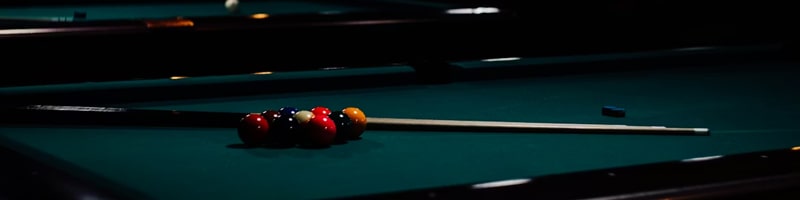
The second major category where Lo-Fi thrives is what we might call “sports of millimeters.” This includes billiards (specifically snooker), darts, archery, and competitive shooting. What unites these diverse activities? The absolute necessity for perfect, unwavering control over fine motor skills and breath. A single extra heartbeat at the wrong moment, a micro-spasm in the wrist, or a slight lapse in concentration—and the ball misses the pocket, or the arrow flies wide of the bullseye.
In a game of snooker, where frames can last for hours and require immense patience, Lo-Fi helps maintain a steady, unshakeable psychological baseline. It is a sport built on rituals: the approach to the table, the assessment of the angles, the rhythmic chalking of the cue. Lo-Fi becomes the natural soundtrack to this slow-motion choreography. It does not demand the player’s attention; instead, it serves as a metronome that helps the athlete stay “in the zone” even after a frustrating mistake. In this environment, Lo-Fi acts as a non-pharmacological sedative, keeping the hands steady and the mind cool under pressure.

Beyond the Arena
However, sport is not always defined by professional arenas or the quest for medals. There is a significant layer of physical activity that is better described as a “sporting lifestyle.” Activities such as skateboarding, longboarding, and surfing have historically been linked to a more relaxed, counter-cultural vibe.
Imagine a city at twilight: an empty, smooth road and a person gliding on a longboard. In this scenario, there is no urge to break land speed records. What matters is the sensory experience—the feeling of the wind, the texture of the asphalt under the wheels, and the fluid grace of the turns. Lo-Fi perfectly encapsulates and enhances this “street romance.” It is music for those who view movement as a way to clear the mind and find a rhythm in the urban chaos, rather than a way to maximize caloric burn.
Even in the world of golf—a sport often perceived as traditional and rigid—Lo-Fi is finding a foothold. Golf is essentially a long, scenic walk interrupted by intense moments of concentration. The vast green spaces, the natural sounds, and the unhurried pace of the game pair perfectly with the melancholic, lo-fi melodies. It helps the golfer stay mentally engaged during the long waits between shots, preventing the “over-thinking” that often ruins a good swing.
Where the Beat Fails
For the sake of intellectual honesty, we must admit that Lo-Fi is not a universal performance enhancer. It is fundamentally unsuitable for sports dominated by the sympathetic nervous system—the “fight or flight” response. You will likely never see a professional MMA fighter entering the octagon to the sound of a cozy jazz-hop track. You won’t find an Olympic sprinter trying to explode out of the blocks for a 100-meter dash while listening to the soothing sound of a lo-fi rain loop.
In disciplines that require explosive power, raw aggression, or lightning-fast reactive speed, Lo-Fi would be a hindrance. It naturally dampens the high-intensity physiological arousal needed for such feats. Lo-Fi is a tool for the prefrontal cortex—the seat of reason and planning—rather than the amygdala, which governs our most primal, survival-based reactions.
Conclusion
In conclusion, to which sport does the Lo-Fi genre best belong? The answer is: any discipline where the primary instrument of victory is self-mastery.
Lo-Fi is the essential soundtrack for the modern intellectual, the precision marksman, the chess strategist, and the urban philosopher on wheels. It is a genre that teaches us a valuable lesson: that sport can be about more than just external competition; it can be about achieving internal harmony. In a world that constantly demands we be louder, faster, and more aggressive, “Lo-Fi sports” offer a vital alternative—victory through composure. If your goal is to move not just with speed, but with maximum awareness and inner comfort, you will find no better companion than a steady, low-fidelity beat. It may not make your muscles larger, but it will undoubtedly make your focus unbreakable.
P.S. If you’re interested in how this unique vibe extends beyond the sound, be sure to check out our analysis of the aesthetics of lo-fi music album covers and how they define the genre’s visual language.
Rate this post along with 0 others