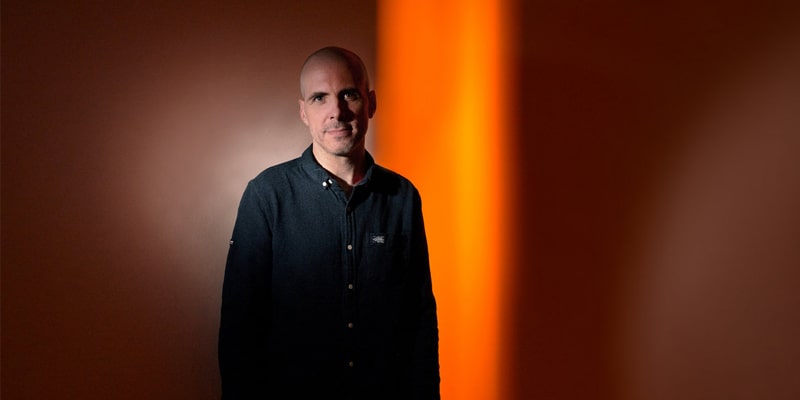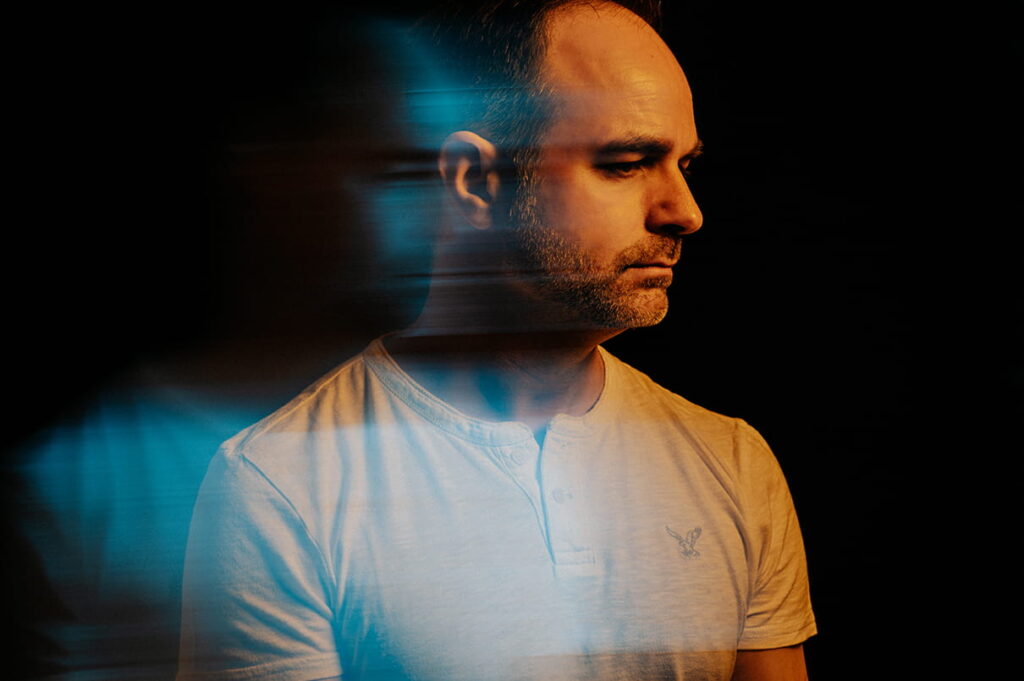
In a world that never stops making noise, the music of Thomas Lemmer serves as something more than just a soundtrack—it is a sanctuary. The German producer, whose discography now spans over 500 tracks, has traveled a path from the classical pipes of a church organ to the cutting edge of immersive sound design in Dolby Atmos. His works, such as the iconic album HOPE or the award-winning single Nocturnal Embrace, have become a manifesto for intentional listening.
2026 marks a milestone for the artist: the publication of his profound book “From Silence to Sound”, the vinyl release of MOMENTS IN STILLNESS for Piano Day, and his latest album INFINITY. Today, we sit down with Thomas to discuss the philosophy of silence, the magic of creative accidents, and how to maintain “acoustic health” in an increasingly loud world.
Part 1: Origins and the Philosophy of Silence
Hi Thomas! First of all, thank you so much for taking the time to talk with us. Your schedule looks incredibly busy right now with the preparations for Piano Day, your book launch, and all the new releases. It’s a real pleasure to have the chance to dive into your creative world.
Hi! Thank you for this wonderful opportunity. I’m always happy to connect and share some thoughts about what I love doing most. Your questions are very insightful, and I’m looking forward to our conversation!
Thomas, you started with classical piano, but then spent years dedicated to the church organ. That instrument demands a unique sense of space and grandeur. Do you feel that those walls were where your love for the ‘infinite’ sounds and ambient textures we hear today was born?
Yes—without a doubt. Both piano and organ shaped how I think about harmony, melody, and, most importantly, sound in space. I’m very harmony-driven, and I spend a lot of time crafting melodies with an almost obsessive attention to detail. That classical background still lives in everything I do. The textures in my ambient work come directly from that mindset: listening closely, shaping tone, and letting sound breathe inside an imagined room—much like those church walls taught me.
Your book is titled From Silence to Sound. I’m curious—how do you personally experience that first second of creation? Is silence a void that needs to be filled, or is it already a complete piece of music to which you simply add dimension?
For me, silence isn’t a void that needs to be filled—it’s something to be listened to with intention. If you listen closely, silence starts to “speak,” and ideas appear almost naturally. Music is art in time, and if you allow sound the time and space to evolve, silence has to be part of it. It’s like light and darkness—one can’t exist without the other.
You once said that you create beautiful things because they make life worth living. Have there been moments in your career when a track you wrote became ‘medicine’ for you personally during a difficult time, much like the HOPE album during the pandemic?
Absolutely. Dreamscapes was exactly that kind of album for me. I needed quiet—real space for myself—and I felt drawn to create something calming and introspective. Working on that record became a place I could disappear into: crafting something beautiful, getting lost in the process, and forgetting the world for a moment. In that sense, it truly was medicine.
What touched me deeply was hearing the same from listeners. People told me the album became a place they could return to—close their eyes, breathe, and step away from everything for a while.
You’ve mentioned that you don’t see music as ‘material’—to you, it feels more spiritual. When you’re working in the studio late at night, do you feel more like a craftsman turning synthesizer knobs, or a medium allowing a flow to pass through you?
I’m definitely more feeling-driven than technology-driven. I love tools and I’m fascinated by what’s possible today—there’s almost nothing you can’t do in modern production. But technology is still just a language to express what I feel, or what I hear in my head.
So yes, it can feel spiritual in the sense that something invisible becomes real—and it can reach other people emotionally. I’ve often received messages from listeners saying they felt exactly that connection, and that’s the part that still amazes me.
In your advice for producers, you emphasize the creative mindset and intuition. Can you recall a specific moment when logic told you ‘this is wrong,’ but you trusted your gut—and as a result, a hit like AMBITRONIC was born?
Oh yes—this happens quite often. I remember writing Nocturnal Embrace on the piano, for example. I was working on the melody and accidentally played a “wrong” note. But that note gave the melody its character. When I repeated it intentionally and kept going, something original appeared.
It was similar with AMBITRONIC. The album started as a pure ambient idea, but I introduced elements that weren’t typical for beatless, pad-driven ambient music. Logic could have said, “That doesn’t belong.” But I trusted my gut—and I think that honesty translated to the listener and helped make the album feel unique.
Part 2: The Creative Lab and the Magic of Dreamscapes
The story of how you accidentally corrupted the files for ‘Drifting Through the Milky Way’ and ended up creating a Lo-Fi version is so inspiring. How often do you allow these ‘happy accidents’ to reshape the final sound of your albums?
(Laughs) That one was definitely a special case. I’m very organized and I like having things under control—but I always leave space for happy accidents. Those moments can be pure magic, and sometimes the best ideas come from exactly that.
If an accident reveals something emotionally stronger or more interesting, I don’t fight it. I follow it. It’s an essential part of my process.
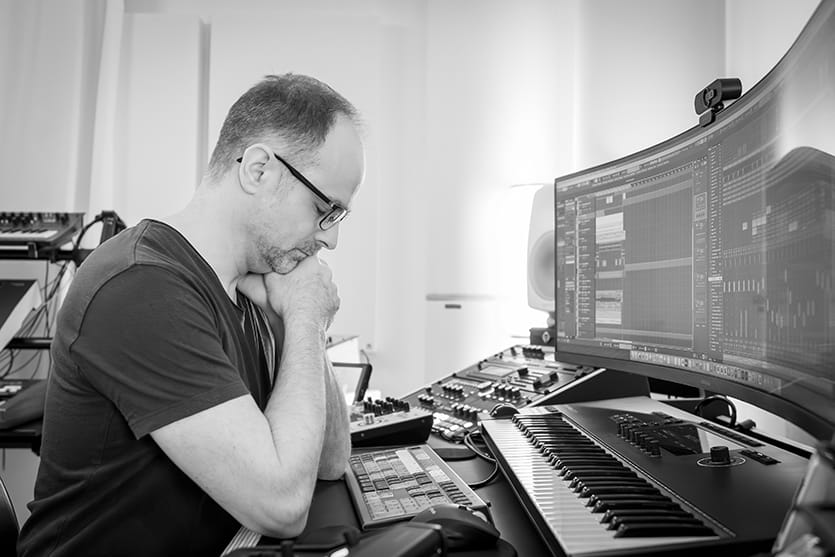
For the Dreamscapes album, you deliberately limited yourself to just a few synthesizers like the Moog Sirin and Hydrasynth. In an era of endless plugins, was it difficult to resist adding ‘one more layer,’ and why did minimalism become a liberation for you?
Limitation is one of the most powerful creative tools I know. The more instruments, plugins, and options you have, the easier it is to get distracted. At first it looks like endless choice will make you more creative—but in practice, it often does the opposite. Too many options delay decisions.
When I limit myself to a few instruments—often hardware only—I become more focused, more intentional, and ultimately more creative. As a bonus, you develop your own sonic fingerprint.
And it pushes you back to the fundamentals: structure, harmony, and melody. Instead of spending hours endlessly tweaking or searching through presets, you put that energy into the music itself.
You’re often asked about technical details, but to put it poetically: is your favorite Strymon Big Sky a way to create ‘space’ in a room, or a way to blur the lines between reality and a dream?
With the BigSky, it’s definitely about blurring the line between reality and dream. Especially on Dreamscapes—the title says it all. I wanted a dreamlike atmosphere, and the BigSky’s beautifully “artificial” spaces were perfect for that world.
You introduced the fascinating concept of ‘acoustic health’ in society. If you were to imagine your city as an orchestra, what is one ‘noisy’ detail you would remove to make it easier for people to breathe?
I would remove the kind of noise that’s aggressive and unnecessary—especially extremely loud vehicles with modified exhausts. That type of sound doesn’t just fill space; it takes space. It raises stress levels instantly and leaves no room for nuance.
If a city is an orchestra, those sounds are like a single instrument playing fortissimo at random moments, ignoring the music around it. Reducing that kind of “acoustic pollution” would instantly make it easier for people to breathe, to concentrate, and to feel present again.
Even though you say you don’t meditate yourself, your music is built on repetitive patterns meant to induce a state of peace. How do you find that fine line where a loop remains calming without becoming repetitive or dull?
On Dreamscapes I worked a lot with loop-oriented structures. But ideally, you shouldn’t really notice the loops. The key is constant, subtle change inside the pattern.
I’ll slowly evolve elements over time—bringing sounds in, letting others fade away, modulating textures, and using mix automation to create movement. The changes are often so subtle that you don’t consciously register them, but you still feel that the music is alive and unfolding. That’s the sweet spot: meditative, but never static.
Part 3: Collaborations and Immersive Horizons
Your album ONE VISION with Spanish producer Oine has been a huge success. What is it like to create such intimate and deep music remotely without being in the same room? Does the ‘human spark’ ever feel at risk?
Ironically, even though we weren’t in the same room, it often felt like Adrián was “there” through his music while I was working—and I think he would say the same.
We communicated intensely throughout the writing and production process, sending ideas and versions back and forth all the time. Because of that, I never felt the human spark was at risk.
In a way, remote collaboration can even create a special kind of freedom: when the other person isn’t sitting next to you, you don’t get corrected immediately—you explore, experiment, and then share what you truly believe is the strongest result. With our workflow and trust, it never felt lonely; it felt focused.
You’ve collaborated with many incredible vocalists, like Lena Belgart. When you write music for a collaboration, do you create a space for the voice to ‘fit into,’ or does the voice act as the initial impulse around which you build the landscape?
In most cases, I build the music first—and in about 90% of those cases, I already imagine how the vocal could live inside the track. So yes, I intentionally leave space for the singer.
But once the vocal arrives, everything can change. Then I start reshaping the production around the voice—supporting it as well as possible, rather than distracting from it. If the vocals carry the emotion, my job is to make sure nothing competes with that.
You were one of the pioneers of Atmos in your genre. After experiencing music that literally surrounds the listener, does traditional stereo feel a bit ‘flat’ or cramped to you now?
Both formats have their place. Dolby Atmos is incredibly impressive—if you switch to stereo right after, you might think, “Wow… stereo is the new mono!” (Laughs.)
But stereo can still be powerful, direct, and emotionally intense. Every format has pros and cons, and I genuinely love both.
That said, my music naturally invites an immersive experience. When you can place textures around the listener, the emotional world becomes even more tangible.
Your recent trips to studios in Berlin seemed very intense. Is there a specific ‘frequency code’ in that city that makes you think about new projects differently than you do at home?
Definitely. I live in a very small town—it’s quiet, and my home is right at the edge of a protected natural area. That calm environment is beautiful for focus.
Berlin is the complete opposite: constant movement, noise, architecture, and history everywhere. It feels like the city has its own rhythm and energy, and that can be incredibly inspiring. It reminds me how many worlds exist at once—and it often sparks new ideas simply because it shifts my perspective.


Track ‘Nocturnal Embrace’ has brought you prestigious awards, including the German Songwriting Award. Looking back at the moment of its creation, did you feel then that you were making something special, or was it just another late-night piano session?
That song is very close to my heart. From the first note to the final production, it captured exactly what I was feeling at the time—and in a way, it still carries and protects that moment for me.
So no, it wasn’t just another late-night piano session. I didn’t know it would lead to awards, of course—but I did feel it was special. And I think the music says the rest better than any explanation can.
Part 4: Legacy and the Future
Your discography now spans over 500 tracks. If you had to leave only one for your grandchildren to explain who Thomas Lemmer was, which piece would it be?
Wow—that’s a difficult question. It’s like asking which child is your favorite. (Laughs.)
But if I had to choose one, I think Peaceful carries a lot of my musical DNA: the harmony, the atmosphere, the emotional tone, and the kind of calm I always try to create.
That said… I’m still torn. Choosing just one feels almost impossible.
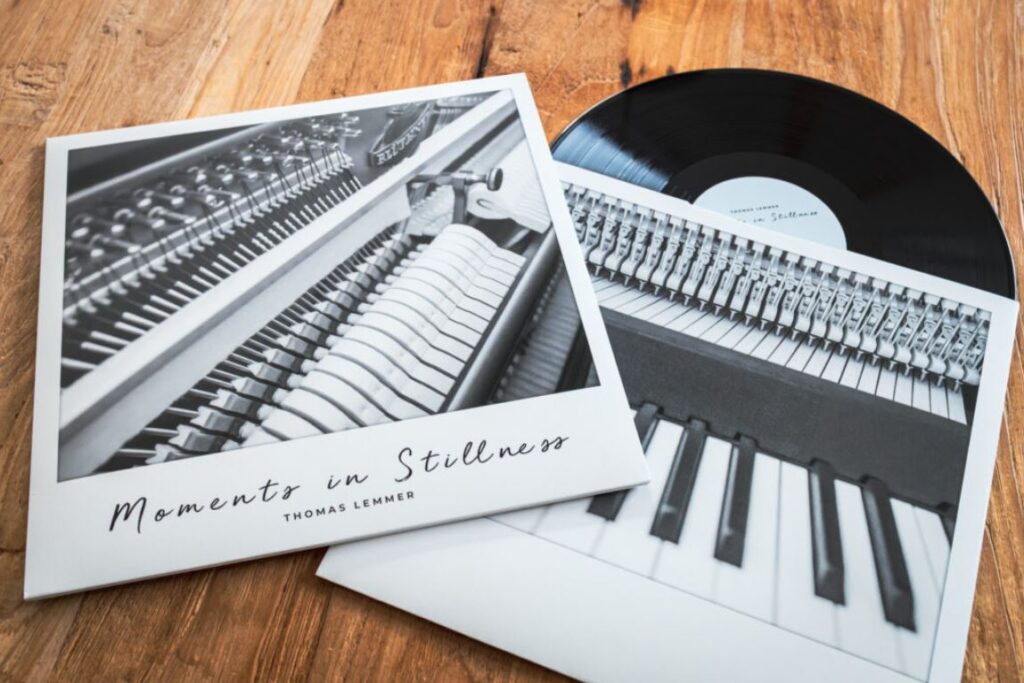
In 2026, you’re releasing the vinyl-only edition MOMENTS IN STILLNESS for Piano Day. In the age of streaming, what does the physical touch of a needle on a record and a limited edition release mean to you personally?
In today’s world, many of us spend so much time online—and with streaming, people often skip after a few seconds if the intro isn’t instantly catchy. Attention spans are shorter, and truly listening has become rarer.
With physical releases, I want to bring things back to the roots. When someone chooses a vinyl edition, they do it intentionally. Yes, the object matters—it’s beautiful to hold—but the deeper meaning is the ritual and the time you dedicate to the music.
You take the record out, place it on the turntable, and you don’t skip around. You enter the album the way it was designed—something an artist may have spent months or years creating. That kind of listening gives music more value. It’s no longer “junk food.” It becomes an experience again.
Your upcoming work with Sinatic is titled INFINITY. After 20 years in music, do you feel your creative resources are truly infinite, or is this title a search for the answer to ‘what’s next’?
We didn’t choose the title because we believe creativity is literally infinite. It’s more an expression of the feeling the music creates—something wide, open, and endless.
For me, “infinity” describes a mood: the sense of space, depth, and timelessness that the tracks evoke. It’s less about a statement and more about an atmosphere.
Writing a book is a step from being an artist to being a guide. Is there one piece of advice from From Silence to Sound that you wish you could have given your younger self 20 years ago when you first opened a DAW?
I would tell my younger self: this is a journey. Every piece of music you create represents what you know and what you felt at that moment—and that’s beautiful.
Be yourself. Trust your instincts. Stay curious. Don’t overthink everything. You learn more from mistakes than from success, and you have to fail in order to grow.
Have no fear—just do it the best you can, and never stop learning and evolving.
You’ve said that ‘the journey is the goal’. If you were to find that ‘perfect sound’ you’ve been searching for your whole life tomorrow, would that be the end of your journey, or the beginning of a new one?
It would be the beginning of a new chapter—like turning the page.
The beauty of music is that it’s endless discovery: sound, emotion, expression. If you truly love it, it never stops. Even if you reach something you once considered “perfect,” you’ll immediately hear the next possibility—and the journey continues.
Closing Thoughts
This conversation with Thomas Lemmer is a reminder of how vital it is to stop and listen to the silence. In his words, we feel the same harmony found in his tracks: a balance between technology and soul, between control and happy accidents.
Thomas’s music teaches us that the journey never truly ends—it simply opens new chapters. We thank Thomas for his sincerity and for continuing to create the beauty that makes life worth living.
Rate this post along with 3 others